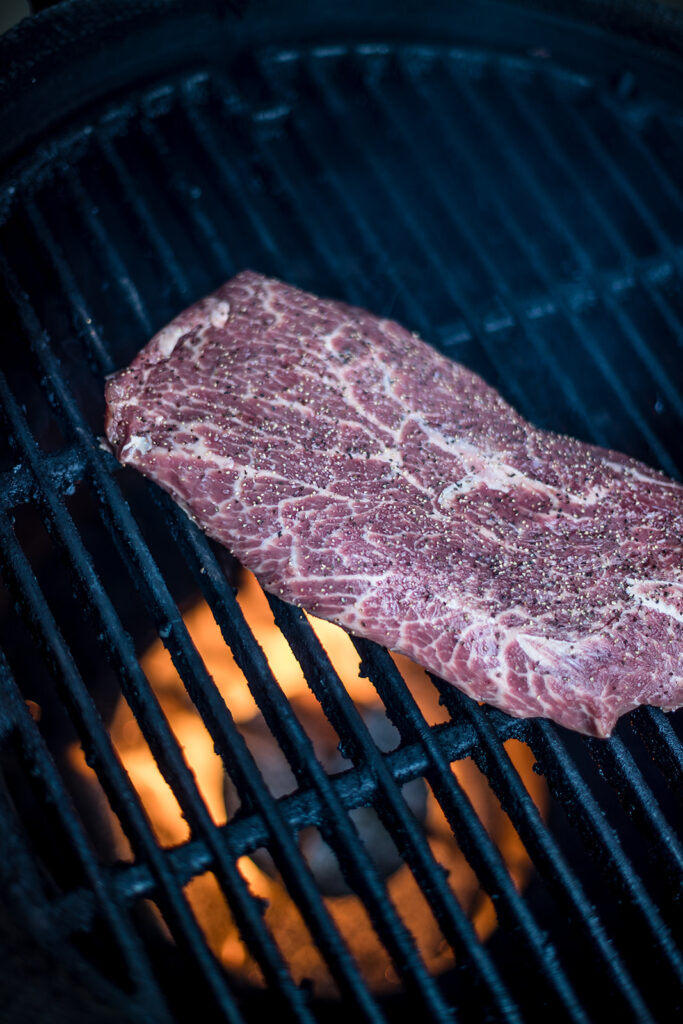
There’s a strange gap in the meat case where price doesn’t always match eating quality. Some of the most flavorful, satisfying steaks are also some of the most economically affordable. The difference isn’t that they’re “worse” cuts, it’s that they’re less forgiving. They rely more on technique than cost.
Once you understand how to handle them, these cuts can eat just as well as premium steakhouse options.
Chuck Eye Steak
Chuck eye comes from the shoulder area right next to ribeye, which is why it carries a similar richness and beef-forward flavor. It’s one of the closest things you’ll get to ribeye at a lower price point.
The key is building a strong crust while allowing enough time for the fat to properly render. A light dry salt ahead of cooking helps season the meat evenly and dries the surface so it sears instead of steaming. From there, a hot cast iron pan does most of the work. Finishing with butter, garlic, and herbs adds depth and aroma that instantly elevates it.
Flat Iron Steak
Flat iron is one of the most tender economically affordable cuts available. It comes from the shoulder but has very little connective tissue compared to other cuts from the same area.
Because it’s already naturally tender, the goal is precision rather than transformation. A fast, high-heat sear is enough to develop flavor while preserving juiciness. Overcooking is what takes this cut from excellent to tough. Once rested, slicing against the grain ensures a consistently tender bite. A simple finishing touch like flaky salt or a bright herb sauce helps highlight its natural flavor.
Sirloin
Sirloin is a lean, reliable cut that benefits from structure and timing more than heavy technique. It doesn’t rely on fat for flavor, so it responds well to seasoning and controlled cooking.
A short marinade works well here to add moisture and depth. Olive oil, garlic, soy sauce, and a light acid such as vinegar or citrus help enhance the meat without overpowering it. Cook it quickly over high heat, then allow a longer rest period so the juices redistribute. That resting step is what separates a dry sirloin from a juicy one.
Flank Steak
Flank steak is defined by long muscle fibers, which means texture depends almost entirely on slicing and preparation.
A marinade helps build surface flavor, but the most important transformation happens after cooking. A fast sear or grill over high heat develops flavor while keeping the center medium rare. After resting, slicing very thinly against the grain shortens the fibers and dramatically improves tenderness. This step is essential for turning flank steak into something that feels elevated.
Skirt Steak
Skirt steak is intensely beefy and naturally flavorful, with a loose grain that cooks quickly and absorbs seasoning easily.
It performs best with high heat and minimal handling. A short cook time preserves its texture while locking in flavor. The finishing step is where it becomes memorable: acidic or herb-forward additions like lime, chimichurri, or garlic butter balance the richness and give it a more refined finish.
Denver Steak
Denver steak comes from the chuck underblade and is one of the more underrated economically affordable cuts. It has strong marbling and a tenderness that surprises many people the first time they try it.
A dry brine overnight helps the seasoning penetrate the fat and improves overall flavor. Cooking should focus on developing a deep crust while keeping the interior juicy. When handled correctly, it eats closer to a ribeye than its price would suggest.
Tri-Tip
Tri-tip is a larger cut that behaves more like a small roast than a traditional steak. It has a unique grain structure that changes direction across the cut, which makes slicing especially important.
Generous seasoning works best here since the size of the cut can handle it. A two-stage cooking method, starting lower and finishing with high heat, helps balance tenderness and crust development. Slicing against the grain in both directions is what determines the final texture.
What Actually Makes Economically Affordable Steak Taste Expensive
Across all of these cuts, the difference in eating quality comes down to a few consistent principles rather than price.
Salt early enough to improve both seasoning and texture. Dry the surface so the meat sears instead of steams. Use high heat to build crust, then allow proper resting time so juices redistribute. Finally, slice against the grain to ensure tenderness.